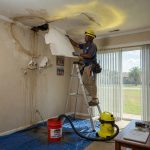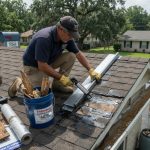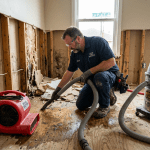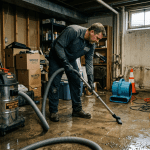
Water damage repair involves extracting standing water, drying affected areas, removing damaged materials, and restoring your home to pre-damage condition. Professional restoration typically costs $1,500-$7,000 for most homes, takes 3-7 days, and should begin within 24-48 hours to prevent mold growth and structural damage.
What Are the Signs of Serious Water Damage?
Serious water damage shows clear warning signs that require immediate professional attention. Visible water stains, warped flooring, musty odors, and soft drywall indicate damage beyond surface level that can compromise your home’s structure and safety.
Look for these critical indicators:
- Standing water deeper than 1 inch or covering large areas.
- Sagging ceilings or walls that feel soft when pressed.
- Electrical hazards like wet outlets, flickering lights, or exposed wiring in wet areas.
- Strong musty smells indicate mold growth has already started.
- Buckled hardwood floors or carpet that squishes underfoot.
- Discolored walls with brown, yellow, or dark stains spreading outward.
Category 3 water damage (sewage, flooding, or contaminated water) always requires professional handling due to health risks. If you see black water, smell sewage, or notice water from outside sources, evacuate the area and call professionals immediately.
The “24-48 hour rule” applies here: mold can begin growing within this timeframe in humid conditions, especially in Central Texas, where indoor humidity above 60% accelerates the process.
How Much Does Water Damage Restoration Cost?
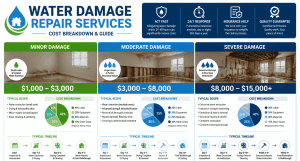
Water damage restoration costs vary significantly based on damage severity, affected area size, and water contamination level. Most homeowners pay between $1,500-$7,000 for professional restoration, with the national average claim reaching $12,514 when including contents replacement.
Cost breakdown by damage level:
- Minor damage (Category 1): $1,500-$3,000 for small areas with clean water.
- Moderate damage (Category 2): $3,000-$8,000 for gray water affecting multiple rooms.
- Severe damage (Category 3): $8,000-$15,000+ for contaminated water or structural repairs.
Regional variations matter. In New York City, average repair costs reach $4,193, ranging from $1,492 to $6,975. Rural areas typically cost 20-30% less due to lower labor rates.
Additional cost factors include:
- Emergency service fees: $200-$500 for 24/7 response.
- Mold remediation: $500-$3,000 if growth has started.
- Contents restoration: $2-$8 per item for cleaning and storage.
- Structural repairs: $1,000-$5,000 for flooring, drywall, or framing replacement.
Most restoration companies provide free assessments and written estimates. Get quotes from 2-3 certified professionals before choosing, and verify they carry proper licensing and insurance.
Can I Do Water Damage Repair Myself
DIY water damage repair works for minor, clean water incidents affecting small areas, but most water damage requires professional equipment and expertise to prevent long-term problems like mold growth and structural issues.
You can handle DIY repairs when:
- Water source is clean (broken pipe, not sewage or flooding).
- The affected area is less than 10 square feet.
- Water depth was under 1 inch.
- No electrical systems were affected.
- You can start the cleanup within 2-4 hours.
Essential DIY steps for minor damage:
- Stop the water source immediately.
- Remove standing water with a wet/dry vacuum or mops.
- Move furniture and belongings to dry areas.
- Increase air circulation with fans and open windows.
- Use dehumidifiers to reduce moisture below 50%.
- Monitor for 72 hours for signs of mold or recurring moisture.
Call professionals for:
- Category 2 or 3 water (gray water, sewage, flooding).
- Structural damage, such as sagging ceilings or buckled floors.
- Electrical involvement where water contacts outlets or wiring.
- Large areas exceeding 10 square feet.
- HVAC system exposure requiring ductwork cleaning.
The biggest DIY mistake is underestimating hidden moisture. Water travels behind walls, under flooring, and into insulation where standard household equipment can’t reach. Professional moisture meters and thermal imaging detect problems invisible to homeowners.
Difference Between Water Mitigation and Water Restoration
Water mitigation and water restoration are distinct phases of the recovery process. Water mitigation focuses on stopping immediate damage and preventing further loss, while water restoration rebuilds and returns your home to pre-damage condition.
Water mitigation includes:
- Emergency water extraction within 24-48 hours.
- Structural drying with industrial equipment.
- Moisture monitoring and humidity control.
- Temporary protective measures like tarping or board-up.
- Content removal and emergency cleaning.
Water restoration encompasses:
- Replacing damaged materials like drywall, flooring, and insulation.
- Rebuilding structural elements and finishing work.
- Painting, flooring installation, and final repairs.
- Content restoration and replacement.
- Final inspection and quality assurance.
Timeline differences matter. Mitigation must start immediately and typically takes 3-5 days. Restoration begins after complete drying and can take 1-4 weeks, depending on the extent.
Insurance coverage often differs between phases. Most policies cover mitigation costs fully, while restoration may have deductibles and coverage limits. Understanding this distinction helps manage expectations and costs during the claims process.
Many companies offer both services, but some specialize in only mitigation or restoration. Choose contractors certified by the Institute of Inspection, Cleaning, and Restoration Certification (IICRC) for either phase.
How Long Does Water Damage Repair Take?
Water damage repair typically takes 3-7 days for drying and mitigation, plus 1-4 weeks for full restoration, depending on damage severity, affected materials, and weather conditions that impact drying times.
Mitigation timeline (immediate response):
- Day 1: Assessment, water extraction, and equipment setup.
- Days 2-3: Active drying with dehumidifiers and air movers.
- Days 4-5: Moisture monitoring and equipment adjustment.
- Days 5-7: Final drying confirmation and equipment removal.
Restoration timeline (rebuilding phase):
- Week 1: Demolition of damaged materials and structural assessment.
- Week 2-3: Rebuilding, drywall installation, and major repairs.
- Week 3-4: Flooring, painting, and finishing work.
- Final week: Content restoration and move-in preparation.
Factors that extend timelines:
- Severe structural damage requires permits and inspections.
- Mold growth adds 3-7 days for remediation.
- Insurance delays in approving the scope or payments.
- Material availability for specialty flooring or fixtures.
- Weather conditions are slowly drying in humid climates.
Factors that speed recovery:
- Immediate response within 2-4 hours of damage.
- Proper equipment sizing for the affected square footage.
- Pre-approved contractors with insurance companies.
- Clear communication between all parties.
Most reputable contractors provide daily progress updates and realistic timelines upfront. Be wary of companies promising completion in under 72 hours unless damage is truly minimal.
Does Homeowners Insurance Cover Water Damage?
Most homeowners’ insurance covers sudden and accidental water damage like burst pipes or appliance failures, but excludes gradual damage, flooding, and maintenance-related issues. Water damage accounts for 24% of all homeowners insurance claims, making it the second most common claim type.
Typically covered water damage:
- Burst pipes from freezing or sudden failure
- Appliance malfunctions (washing machines, water heaters, dishwashers)
- Roof leaks from storm damage
- Accidental overflow from bathtubs or sinks
- HVAC system leaks from covered perils
Common exclusions include:
- Flood damage requires separate flood insurance.
- Gradual leaks from poor maintenance or wear.
- Sewer backup unless specifically covered by endorsement.
- Groundwater seepage through foundations.
- Damage from frozen pipes if the home was vacant or unheated.
Filing successful claims requires:
- Immediate notification to your insurance company.
- Detailed documentation with photos and videos.
- Professional water extraction to minimize damage.
- Receipts and records of emergency services.
- Cooperation with adjusters during inspection.
Average claim payouts reach $12,514 nationally, but actual coverage depends on your policy limits, deductibles, and coverage types. Review your policy annually and consider endorsements for sewer backup or equipment breakdown if you’re in high-risk areas.
The key distinction is “sudden vs. gradual” – insurance covers unexpected incidents but not maintenance issues or long-term deterioration.
What Equipment Do Professionals Use for Water Damage?
Professional water damage restoration requires specialized equipment that extracts moisture, monitors progress, and prevents secondary damage like mold growth. Industrial-grade extractors, dehumidifiers, and air movers form the core equipment arsenal that household tools cannot match.
Water extraction equipment:
- Truck-mounted extractors removing 200+ gallons per minute.
- Portable extractors for tight spaces and upper floors.
- Submersible pumps for deep standing water.
- Weighted extractors for carpet and padding removal.
Drying and dehumidification:
- Low-grain refrigerant (LGR) dehumidifiers remove 150+ pints daily.
- Desiccant dehumidifiers for extreme humidity conditions.
- High-velocity air movers create optimal drying conditions.
- Axial fans for large area air circulation.
Monitoring and detection:
- Moisture meters measure wood, drywall, and concrete moisture content.
- Thermal imaging cameras detect hidden moisture behind walls.
- Hygrometers monitor relative humidity levels.
- Data loggers track drying progress over time.
Specialized tools:
- Injectable systems drying inside wall cavities without demolition.
- HEPA air scrubbers remove airborne contaminants.
- Hydroxyl generators eliminate odors and pathogens.
- Containment barriers prevent cross-contamination.
Professional equipment costs $50,000-$100,000+ per truck, explaining why rental options for homeowners are limited and often ineffective. The combination of extraction power, monitoring precision, and drying capacity makes professional restoration significantly faster and more thorough than DIY attempts.
How to Prevent Mold After Water Damage?
Mold prevention after water damage requires rapid moisture removal within 24-48 hours and maintaining humidity below 50% throughout the drying process. Mold spores exist everywhere but need moisture, warmth, and organic materials to grow into visible colonies.
Immediate mold prevention steps:
- Extract standing water within 2-4 hours using pumps or wet vacuums.
- Remove wet materials like carpet padding, insulation, and porous items.
- Increase air circulation with fans pointing toward wet surfaces.
- Reduce humidity using dehumidifiers rated for your square footage.
- Monitor moisture levels daily with moisture meters or hygrometers.
Critical humidity control:
- Target humidity: Below 50% relative humidity.
- Air temperature: 70-80°F to optimize drying.
- Air movement: 1-3 air changes per hour minimum.
- Moisture monitoring: Check levels twice daily during drying.
High-risk areas requiring extra attention:
- Basements and crawl spaces are where humidity naturally accumulates.
- Behind walls where moisture hides from air circulation.
- HVAC systems can spread mold spores throughout the home.
- Carpet and padding that retain moisture for extended periods.
When mold appears despite prevention:
- Small areas (under 10 sq ft): Clean with antimicrobial solutions.
- Large areas or HVAC involvement: Hire certified mold remediation specialists.
- Health concerns: Evacuate sensitive individuals during cleanup.
In humid climates like Central Texas, indoor humidity above 60% can trigger mold growth within 24-48 hours. Professional restoration companies use industrial dehumidifiers and monitoring equipment to maintain optimal conditions throughout the drying process.
Water Damage Repair for Different Types of Flooring
Different flooring materials require specific restoration approaches based on their porosity, construction, and moisture tolerance. Hardwood and laminate often need replacement, while tile and concrete can usually be saved with proper drying techniques.
Hardwood flooring restoration:
- Solid hardwood: Can often be dried and refinished if cupping is minimal.
- Engineered hardwood: More susceptible to delamination; replacement often needed.
- Drying process: Remove every other board for air circulation, and use specialized drying mats.
- Timeline: 2-3 weeks for complete moisture equilibration before refinishing.
Carpet and padding:
- Category 1 water: Professional cleaning and drying possible within 24 hours.
- Category 2-3 water: Complete replacement required for health safety.
- Padding: Almost always requires replacement due to contamination risk.
- Subfloor: Must be dried to below 12% moisture content before reinstallation.
Tile and stone flooring:
- Ceramic/porcelain tile: Usually salvageable with proper drying.
- Natural stone: May require sealing after drying to prevent staining.
- Grout: Often needs replacement if contaminated water was present.
- Subfloor considerations: Check for moisture damage beneath tile.
Laminate and luxury vinyl:
- Laminate: Typically requires complete replacement due to swelling.
- LVT/LVP: May be salvageable if water didn’t reach seams.
- Click-lock systems: Allow for easier removal and potential reinstallation.
Concrete and basement floors:
- Polished concrete: Usually dries successfully with industrial equipment.
- Carpet over concrete: High mold risk; requires aggressive drying.
- Moisture testing: Essential before any covering replacement.
The key factor is the water category and exposure time. Clean water caught within hours offers the best salvage potential, while contaminated water or extended exposure typically requires replacement regardless of flooring type.
When Should I Call a Professional for Water Damage?
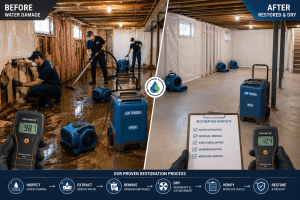
Call a professional water damage restoration company immediately for any water damage exceeding 10 square feet, involving contaminated water, or affecting electrical systems. The 24-48 hour window for preventing mold growth makes professional response timing critical for minimizing long-term damage.
Immediate professional response needed for:
- Category 2 or 3 water (gray water, sewage, flooding from outside).
- Electrical hazards where water contacted outlets, appliances, or wiring.
- Structural concerns like sagging ceilings, soft walls, or foundation issues.
- HVAC system exposure requiring ductwork inspection and cleaning.
- Large affected areas over 10 square feet or multiple rooms.
Professional assessment recommended for:
- Hidden moisture behind walls or under flooring.
- Recurring water problems indicate ongoing leaks.
- Valuable contents requiring specialized cleaning and restoration.
- Insurance claims where documentation and certified work are required.
- Health concerns for family members with respiratory issues or compromised immunity.
Warning signs requiring emergency response:
- Standing water deeper than 1 inch.
- Water is spreading to multiple rooms or floors.
- Musty odors develop within 24-48 hours.
- Visible mold growth is appearing.
- Electrical systems are sparking or malfunctioning.
Questions to ask when calling professionals:
- Are you available for emergency response within 2-4 hours?
- Do you carry IICRC certification and proper insurance?
- Can you provide a written scope and estimate?
- Do you work directly with insurance companies?
- What equipment will you use for my specific situation?
Customer expectations align with industry standards: 72% of customers are willing to pay extra for same-day service, and 68% expect a 60-minute emergency callback. Choose companies that meet these response standards and provide transparent pricing upfront.
Health Risks of Untreated Water Damage
Untreated water damage creates serious health risks through mold growth, bacterial contamination, and structural hazards that worsen over time. The greatest risks come from Category 2 and 3 water containing sewage, chemicals, or other contaminants.
Immediate health risks (24-72 hours):
- Bacterial infections from contaminated water contact.
- Respiratory irritation from airborne moisture and particles.
- Skin and eye irritation from chemical contaminants.
- Slip and fall hazards from wet surfaces and debris.
Short-term risks (1-2 weeks):
- Mold exposure causes coughing, sneezing, and throat irritation.
- Allergic reactions in sensitive individuals.
- Asthma triggers from increased humidity and airborne particles.
- Structural collapse from weakened building materials.
Long-term health consequences:
- Chronic respiratory problems from prolonged mold exposure.
- Toxic mold syndrome in severe cases with black mold (Stachybotrys).
- Compromised indoor air quality affects overall health.
- Increased infection risk for immunocompromised family members.
High-risk populations requiring immediate evacuation:
- Infants and young children under 5.
- Adults over 65 with existing health conditions.
- Individuals with asthma, allergies, or respiratory diseases.
- People with compromised immune systems.
- Pregnant women
Protective measures during cleanup:
- Wear protective equipment: N95 masks, gloves, eye protection.
- Ensure ventilation: Open windows and use fans for air circulation.
- Avoid direct contact with contaminated water or materials.
- Seek medical attention for persistent symptoms after exposure.
The CDC recommends professional remediation for any mold growth exceeding 10 square feet or when health symptoms persist after initial cleanup efforts.
Water Damage Repair for Renters vs Homeowners
Water damage responsibilities differ significantly between renters and homeowners, with landlords typically handling structural repairs while tenants manage personal belongings and temporary living arrangements during restoration.
Homeowner responsibilities:
- Immediate response: Stop the water source and begin emergency mitigation
- Insurance claims: File with homeowners’ insurance and manage the adjuster process
- Contractor selection: Choose restoration companies and oversee work quality
- Cost management: Pay deductibles and any uncovered expenses
- Timeline control: Make decisions about repair scope and material choices
Renter responsibilities:
- Immediate notification: Contact the landlord and document the damage with photos.
- Personal belongings: Protect and clean contents with renters insurance.
- Temporary housing: Arrange alternative accommodations if the unit is uninhabitable.
- Cooperation: Allow access for repairs and inspections.
- Insurance claims: File a separate renters insurance claim for contents.
Landlord responsibilities:
- Structural repairs: Fix building elements like walls, floors, and plumbing.
- Habitability: Ensure the unit meets local housing codes during restoration.
- Professional services: Hire qualified contractors for major repairs.
- Timeline management: Complete repairs within reasonable timeframes.
- Safety compliance: Address health hazards like mold growth.
Insurance coverage differences:
- Homeowners insurance: Covers structure and contents under one policy.
- Renters insurance: Contents only; no structural coverage.
- Landlord insurance: Structure only; excludes tenant belongings.
- Additional living expenses: May be covered by either homeowners or renters policies.
Common disputes and solutions:
- Responsibility questions: Review lease agreements for specific water damage clauses.
- Repair delays: Document communication and consider tenant rights organizations.
- Cost disputes: Get written estimates and understand insurance coverage limits.
- Temporary housing: Know your rights regarding habitability and rent abatement.
Clear communication between all parties and understanding insurance coverage prevents most conflicts during the restoration process.
Conclusion
Water damage repair requires immediate action, proper equipment, and often professional expertise to prevent long-term problems like mold growth and structural deterioration. With over 14,000 Americans facing water emergencies daily and average repair costs exceeding $4,000, understanding the restoration process can save both money and health risks.
The key to successful water damage repair lies in rapid response within 24-48 hours, proper assessment of damage severity, and choosing appropriate repair methods for your situation. While minor clean water incidents may be manageable with DIY efforts, most water damage benefits from professional restoration to ensure complete drying and prevent secondary issues.
Take these immediate steps if you experience water damage: Stop the water source, document everything with photos, contact your insurance company, and call certified restoration professionals for assessment. Remember that what appears minor on the surface often extends into hidden areas requiring specialized equipment to address properly.